Pages

Friday, 7 July 2017

Can we ditch dark energy by better understanding general relativity?

file-20170628-7294-1ssrxrfDark energy and dark matter are theoretical inventions that explain observations we cannot otherwise understand.

On the scale of galaxies, gravity appears to be stronger than we can account for using only particles that are able to emit light. So we add dark matter particles as 25% of the mass-energy of the Universe. Such particles have never been directly detected.

On the larger scales on which the Universe is expanding, gravity appears weaker than expected in a universe containing only particles – whether ordinary or dark matter. So we add “dark energy”: a weak anti-gravity force that acts independently of matter.

Brief history of “dark energy”

The idea of dark energy is as old as general relativity itself. Albert Einstein included it when he first applied relativity to cosmology exactly 100 years ago.

Einstein mistakenly wanted to exactly balance the self attraction of matter by anti-gravity on the largest scales. He could not imagine that the Universe had a beginning and did not want it to change in time.

Almost nothing was known about the Universe in 1917. The very idea that galaxies were objects at vast distances was debated.

Einstein faced a dilemma. The physical essence of his theory, as summarised decades later in the introduction of a famous textbook is:

Matter tells space how to curve, and space tells matter how to move.

That means space naturally wants to expand or contract, bending together with the matter. It never stands still.

This was realised by Alexander Friedmann who in 1922 kept the same ingredients as Einstein. But he did not try to balance the amount of matter and dark energy. That suggested a model in which universes that could expand or contract.

Further, the expansion would always slow down if only matter was present. But it could speed up if anti-gravitating dark energy was included.

Since the late 1990s many independent observations have seemed to demand such accelerating expansion, in a Universe with 70% dark energy. But this conclusion is based on the old model of expansion that has not changed since the 1920s.

Standard cosmological model

Einstein’s equations are fiendishly difficult. And not simply because there are more of them than in Isaac Newton’s theory of gravity.

Unfortunately, Einstein left some basic questions unanswered. These include – on what scales does matter tell space how to curve? What is the largest object that moves as an individual particle in response? And what is the correct picture on other scales?

These issues are conveniently avoided by the 100-year old approximation — introduced by Einstein and Friedmann — that, on average, the Universe expands uniformly. Just as if all cosmic structures could be put through a blender to make a featureless soup.

This homogenising approximation was justified early in cosmic history. We know from the cosmic microwave background — the relic radiation of the Big Bang — that variations in matter density were tiny when the Universe was less than a million years old.

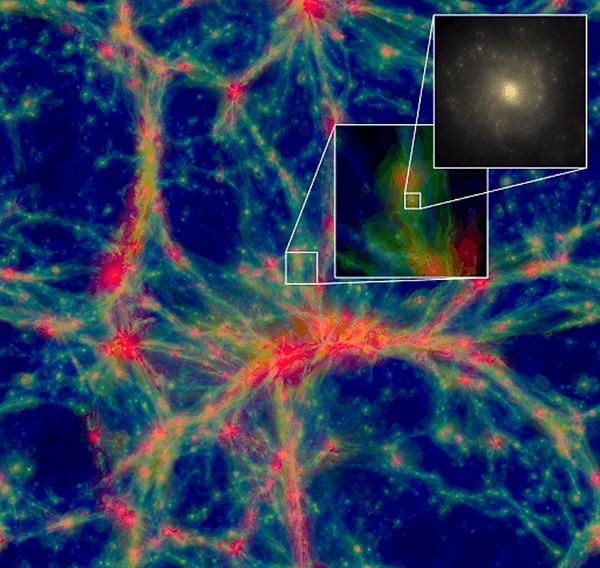
But the universe is not homogeneous today. Gravitational instability led to the growth of stars, galaxies, clusters of galaxies, and eventually a vast “cosmic web”, dominated in volume by voids surrounded by sheets of galaxies and threaded by wispy filaments.

In standard cosmology, we assume a background expanding as if there were no cosmic structures. We then do computer simulations using only Newton’s 330-year old theory. This produces a structure resembling the observed cosmic web in a reasonably compelling fashion. But it requires including dark energy and dark matter as ingredients.

Even after inventing 95% of the energy density of the universe to make things work, the model itself still faces problems that range from tensions to anomalies.

Further, standard cosmology also fixes the curvature of space to be uniform everywhere, and decoupled from matter. But that’s at odds with Einstein’s basic idea that matter tells space how to curve.

We are not using all of general relativity! The standard model is better summarised as: Friedmann tells space how to curve, and Newton tells matter how to move.

dark_energy_inflation

Since the early 2000s, some cosmologists have been exploring the idea that while Einstein’s equations link matter and curvature on small scales, their large-scale average might give rise to back reaction – average expansion that’s not exactly homogeneous.

Matter and curvature distributions start out near uniform when the universe is young. But as the cosmic web emerges and becomes more complex, the variations of small-scale curvature grow large and average expansion can differ from that of standard cosmology.

Recent numerical results of a team in Budapest and Hawaii that claim to dispense with dark energy used standard Newtonian simulations. But they evolved their code forward in time by a non-standard method to model the back reaction effect.

Intriguingly, the resulting expansion law fit to Planck satellite data tracks very close to that of a ten-year-old general relativity-based back reaction model, known as the times cape cosmology. It posits that we have to calibrate clocks and rulers differently when considering variations of curvature between galaxies and voids. For one thing, this means that the Universe no longer has a single age.

In the next decade, experiments such as the Euclid satellite and the CODEX experiment, will have the power to test whether cosmic expansion follows the homogeneous law of Friedmann, or an alternative back reaction model.

To be prepared, it’s important that we don’t put all our eggs in one cosmological basket, as Avi Loeb, Chair of Astronomy at Harvard, has recently warned. In Loeb’s words:

To avoid stagnation and nurture a vibrant scientific culture, a research frontier should always maintain at least two ways of interpreting data so that new experiments will aim to select the correct one. A healthy dialogue between different points of view should be fostered through conferences that discuss conceptual issues and not just experimental results and phenomenology, as often is the case currently.

What can general relativity teach us?

While most researchers accept that the back reaction effects exist, the real debate is about whether this can lead to more than a 1% or 2% difference from the mass-energy budget of standard cosmology.

Any back reaction solution that eliminates dark energy must explain why the law of average expansion appears so uniform despite the inhomogeneity of the cosmic web, something standard cosmology assumes without explanation.

Since Einstein’s equations can in principle make space expand in extremely complicated ways, some simplifying principle is required for their large-scale average. This is the approach of the times cape cosmology.

Any simplifying principle for cosmological averages is likely to have its origins in the very early Universe, given it was much simpler than the Universe today. For the past 38 years, inflationary universe models have been invoked to explain the simplicity of the early Universe.

While successful in some aspects, many models of inflation are now ruled out by Planck satellite data. Those that survive give tantalising hints of deeper physical principles.

Many physicists still view the Universe as a fixed continuum that comes into existence independently of the matter fields that live in it. But, in the spirit of relativity – that space and time only have meaning when they are relational – we may need to rethink basic ideas.

Since time itself is only measured by particles with a non-zero rest mass, maybe space-time as we know it only emerges as the first massive particles condense.

Whatever the final theory, it will likely embody the key innovation of general relativity, namely the dynamical coupling of matter and geometry, at the quantum level.


Thursday, 6 July 2017

Richard Pearson look at the Universe Today, Part 5: ‘Advanced Civilisations ..’

11182339_794895210596542_8220998414791220126_nThe origin of the Universe occurred 13.8 billion years ago in an event astronomers call the Big Bang. Our universe then sprang into existence through a phase of rapid inflation. It then took 9.3 billion years for the solar system to form along with life and humanity to evolve to the point it is today. It has only been in the last decade that we have been able to search and discover extra solar planets around nearby stars in our own Milky Way galaxy. as of 1 July 2017, there have been 3,621 exoplanets, in 2,712 planetary systems and 611 multiple planetary systems, confirmed detections. This seems a large amount, however in terms of the size of our expanding universe it is miniscule. There are a lot of parameters in play just for life to have a chance of creation and evolving. Anyone who has read Charles Dwain’s Origin of the Species will know that the steps that follow are delicate, and there are many branches of different kinds of life before one is successful and leads humanity. Our own solar system formed 4.5 billion years, and life first took hold on the earth 3.8 billion years ago. It has taken this long for humanity to become the dominant species with a reasonable level of intelligence.

The first galaxies came into existence 200 million years after the big bang, however, this does not mean that the conditions were favourable for life begin on a planet. Our own sun is a third generation star, which means that two stars existed in its place following the big bang, each of which cooked chemical elements in there interiors and exploded as supernova, spreading their contents around as a nebula. It was out of this proto-planetary material our sun and solar system evolved. While we now know that there was more iron in this baby universe, the first stars only contained hydrogen and lithium, which was not sufficient for life to start, there needed to be first, and or second generation stars before hand to cook the heavier elements in their cores.

The question I get asked rather a lot, is: ‘Do you think there is intelligent life in the universe?

There was not sufficient elements around after the first stars died for life to form. Second generation stars are needed to cook the elements further, so my answer is that there is not enough time the supper intelligent beings to exist in the universe today.

I said earlier that the laws of physics are not the same everywhere in the universe, so it is possible that life could have formed earlier on the first planets orbiting distant stars. Here again the parameters have to be just right, with the planet orbiting its parent star inside its habitable zone, and the star being similar to our sun and stable in nature. If the spark of life did happen on a planet with a second generation star, it’s my opinion that the inhabitants would not have evolved more than half way along a Type 1 civilisation on the Kardashev Scale.

The Kardashev Scale was originally designed in 1964 by the Russian astrophysicist Nikolai Kardashev ((born 1932 in Moscow). It has three base classes, each with an energy disposal level: Type I (10¹⁶W), Type II (10²⁶W), and Type III (10³⁶W).

The human race is not on this scale yet. Since we still sustain our energy needs from dead plants and animals, here on Earth, we are a lowly Type 0 civilization and we have a about 100 – 200 years to go before being promoted to a type I civilization.

A Type I designation is a given to species who have been able to harness all the energy that is available from a neighbouring star, gathering and storing it to meet the energy demands of a growing population. This means that we would need to boost our current energy production over 100,000 times to reach this status. However, being able to harness all Earth’s energy would also mean that we could have control over all natural forces. Human beings could control volcanoes, the weather, and even earthquakes! These kinds of feats are hard to believe, but compared to the advances that may still be to come, these are just basic and primitive levels of control.

nagyon-magas-felhokarcolok-2A Type II civilization can harness the power of their entire star (not merely transforming starlight into energy, but controlling the star). Several methods for this have been proposed. The most popular of which is the hypothetical ‘Dyson Sphere.’ This device would encompass every single inch of the star, gathering most (if not all) of its energy output and transferring it to a planet for later use. Alternatively, if fusion power had been mastered by the race, a reactor on a truly immense scale could be used to satisfy their needs. Nearby gas giants can be utilized for their hydrogen, slowly drained of life by an orbiting reactor.

What would this much energy mean for a species? Well, nothing known to science could wipe out a Type II civilization. Take, for instance, if humans survived long enough to reach this status, and a moon sized object entered our solar system on a collision course with our little blue planet–we’d have the ability to vaporize it out of existence. Or if we had time, we could move our planet out of the way, completely dodging it. But let’s say we didn’t want to move Earth… are there any other options? Well yes, because we’d have the capability to move Jupiter, or another planet of our choice, into the way.

A Type III civilisation is where a species then becomes galactic travellers with knowledge of everything having to do with energy, resulting in them becoming a master race. In terms of humans, hundreds of thousands of years of evolution – both biological and mechanical – may result in the inhabitants of this type III civilization being incredibly different from the human race as we know it. These may be cyborgs (or cybernetic organism, beings both biological and robotic), with the descendants of regular humans being a sub-species among the now-highly advanced society. These wholly biological humans would likely be seen as being disabled, inferior, or un-evolved by their cybernetic counterparts.

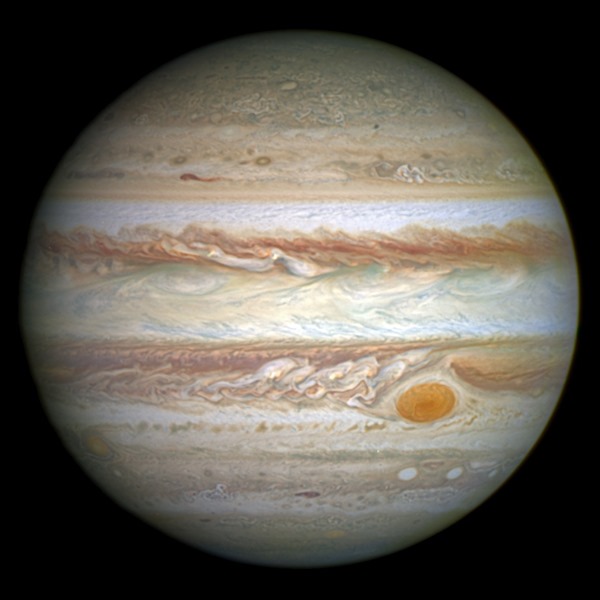
JUNO To fly over the Great Red Spot

Jupiter and its shrunken Great Red SpotJupiter's Great Red Spot as Juno flies in

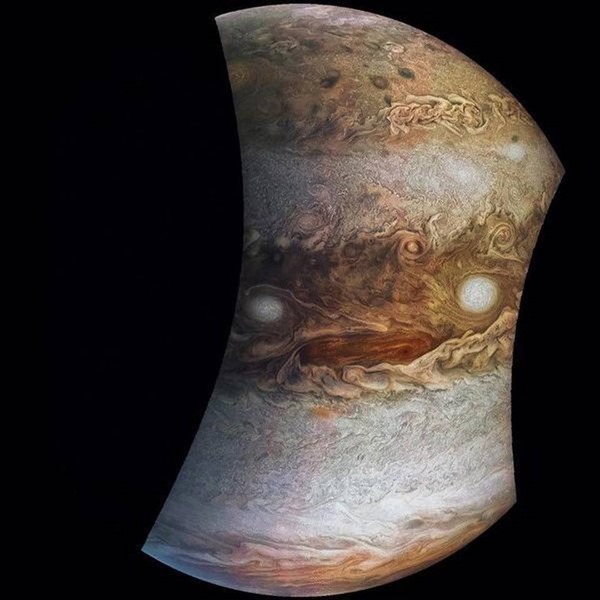
The Juno orbiter is due to fly about 9000 km above the centre of the Great Red Spot (GRS) on Monday night, about 12 minutes after its closest approach to the planet on July 11 at01:55 UT.  NASA have posted two press releases, one about the fly-over,

and one showing some superb mid-infrared images of the GRS taken by Dr Glenn Orton and colleagues on May 18 (and earlier).

These images can be compared with superb visible-light views taken by Christopher Goon May 19, one of which is shown in a new report posted on the Jupiter Section web pages (BAA web site > Jupiter Section > Jupiter in 2016-17 > Report no.13;  unfortunately these e-bulletins cannot give links).

Chris Go's high resolution revealed the regular pattern within the GRS, whose internal rotation could be observed over less than an hour, as shown in an animation of maps made by Michel Jacquesson. The report also shows a very recent image of the GRS (by Gary Walker), which is at exactly the predicted longitude to be below Juno’s track.  A preview of the July 11 flyby (Perijove-7)was posted on the Section web pages as Report no.12. Meanwhile,the best ground-based image of Jupiter ever taken was produced on June 11 by Damian Peach with a team of observers using the 1-metre telescope at the Pic du Midi Observatory in the French Pyrenees.  They were holding a EuroPlanet-sponsored workshop to promote use of the telescope by advanced amateurs, and produced unequally outstanding image of Saturn.  The Jupiter image does not show the GRS, but it does show red oval BA and a wealth of intricate detail in many other features.

Note to members:

We are posting items on the BAA Jupiter Section web pages quite frequently during this apparition with the Juno mission ongoing, but rarely send out e-bulletins. So if you would like to keep up-to-date with Jupiter and Juno, please either check the BAA webpage and Section web page weekly, or follow ‘BAA Jupiter Section’ on Facebook, or contact the BAA Jupiter Section Director via the BAA web site to become a member of the Section and of our emailing list.

John Rogers

___________________________________

John H. Rogers, 

Jupiter Section Director,

British Astronomical Association.

https://www.britastro.org/section_front/15

___________________________________

Wednesday, 5 July 2017

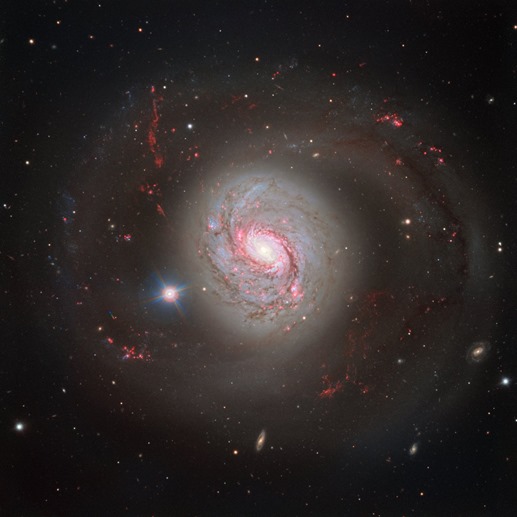
M77 in Cetus | A Dazzling Spiral with an Active Heart

Dazzling galaxy Messier 77This picturesque spiral galaxy appears to be tranquil, but there is more to it than meets the eye. Messier 77 (also known as NGC 1068) is one of the closest active galaxies, which are some of the most energetic and spectacular objects in the Universe. Their nuclei are often bright enough to outshine the whole of the rest of the galaxy. Active galaxies are among the brightest objects in the Universe and emit light at most, if not all, wavelengths, from gamma rays and X-rays all the way to microwaves and radio waves. Messier 77 is further classified as a Type II Seyfert galaxy, characterised by being particularly bright at infrared wavelengths.

This impressive luminosity is caused by intense radiation blasting out from a central engine — the accretion disc surrounding a supermassive black hole. Material that falls towards the black hole is compressed and heated up to incredible temperatures, causing it to radiate a tremendous amount of energy. This accretion disc is thought to be enshrouded by thick doughnut-shaped structure of gas and dust, called a “torus”. Observations of Messier 77 back in 2003 were the first to resolve such a structure using the powerful VLT Interferometer (eso0319).

This image of Messier 77 was taken in four different wavelength bands represented by blue, red, violet and pink (hydrogen-alpha) colours. Each wavelength brings out a different quality: for example, the pinkish hydrogen-alpha highlights the hotter and younger stars forming in the spiral arms, while in red are the fine, thread-like filamentary structures in the gas surrounding Messier 77 [1]. A foreground Milky Way star is also seen beside the galaxy centre, displaying tell-tale diffraction spikes. Additionally, many more distant galaxies are visible; sitting at the outskirts of the spiral arms, they appear tiny and delicate compared to the colossal active galaxy .

Located 47 million light-years away in the constellation of Cetus (The Sea Monster), Messier 77 is one of the most remote galaxies of the Messier catalogue. Initially, Messier believed that the highly luminous object he saw through his telescope was a cluster of stars, but as technology progressed its true status as a galaxy was realised. At approximately 100 000 light-years across, Messier 77 is also one of largest galaxies in the Messier catalogue — so massive that its gravity causes other nearby galaxies to twist and become warped (eso1707) [2].

This image was obtained using the Focal Reducer and low dispersion Spectrograph 2 (FORS2) instrument mounted on Unit Telescope 1 (Antu) of the VLT, located at ESO’s Paranal Observatory in Chile. It hails from ESO’s Cosmic Gems programme, an outreach initiative that produces images of interesting, intriguing or visually attractive objects using ESO telescopes for the purposes of education and outreach.

Tuesday, 4 July 2017

Richard Pearson looks at The Universe Today

11182339_794895210596542_8220998414791220126_nPart 1 | THE WORLD AROUND US

Richard Pearson FRAS

[Tomorrow 5 July I take a look at The Arrow of Time]

Everything around us seems solid and genuine; the brick walls of buildings and infrastructure of roads, railways, airports and space-ports. The structures of all modes transport, and spaceships. Along with the biological make up of all life here on earth, and the various life forms in the Universe as a whole. If we punch a wall or a wooden desk, it really does hurt. People are killed and injured in motor car accidents, train crashes and so forth. To us the world is without doubt ‘real’, and the Universe does contain a great deal of amazing stars, extra-solar-planets, gas clouds, along with exotic objects like black holes, all of which are physical bodies. Astronomers have been studying the Universe with telescopes since the time of Galileo Galilei in 1609, and have managed to explain the physical phenomena of what they have revealed, while new discoveries are made all the time.

“Yet atoms contain a great deal of empty space, so much so that it does not seem plausible that solid objects exist in real terms. In String theory atomic particles like photons, neutrons and electrons can exist either as tiny vibrating strings or fuzzy blobs of atomic particles. So, our world and the Universe should not contain any solid objects at all, yet as intelligent human beings, we know that it does.”

We live in a wonderful complex universe, and we are curious about it by nature. So, what is the world made of? Ordinary matter is made of atoms, which are in turn is made of just three basic components: electrons whirling around a nucleus composed of neutrons and protons. The electron is a truly fundamental particle, but neutrons and protons are made of smaller particles, known as quarks. Quarks are, as far as we know, are truly elementary.

Our current knowledge about the subatomic composition of the universe is summarized in what is known as the Standard Model of particle physics. It describes both the fundamental building blocks out of which the world is made, and the forces through which these blocks interact.

The behaviour of all of these particles (and forces) is described with faultless precision by the Standard Model, with one notable exception: gravity. For technical reasons, the gravitational force, the most familiar in our everyday lives, has proven very difficult to describe microscopically. This has been for many years one of the most important problems in theoretical physics, to formulate a quantum theory of gravity.

In the last few decades, string theory has emerged as the most promising candidate for a microscopic theory of gravity. And it is infinitely more ambitious than that: it attempts to provide a complete, unified, and consistent description of the fundamental structure of our universe. (For this reason, it is sometimes, quite arrogantly, called a 'Theory of everything').

Today String Theory has been superseded by M-Theory, M for membrane. The essential idea behind string theory is that all of the different 'fundamental' particles of the Standard Model are really just different manifestations of one basic object: a string. How can that be? Well, we would ordinarily picture an electron, for instance, as a point with no internal structure. A point cannot do anything but move. However, if string theory is correct, then under an extremely powerful 'microscope' we would realize that the electron is not really a point, but a tiny loop of string. A string can do something aside from moving. It can oscillate in different ways. If it oscillates a certain way, then from a distance you would be unable to tell if it is really a string, we see an electron. But if it oscillates some other way, then we call it a photon, or a quark. So, if string theory is correct, the entire world is made of strings!

maxresdefaultPerhaps the most remarkable thing about string theory is that such a simple idea works. It is possible to derive an extension of the Standard Model which has been verified experimentally with incredible precision from a theory of strings. But it should also be said that, to date, there is no direct experimental evidence that string theory itself is the correct description of Nature. This is mostly due to the fact that string theory is still under development. We know bits and pieces of it, however we do not yet see the whole picture, and we are therefore unable to make definite predictions. In recent years many exciting developments have taken place, radically improving our understanding of what the theory is. Therefore, String Theory informs us that there is only one true unique atomic particle that can change into other particles in the Standard Model, depending upon the vibration of its component string.

Physicist Albert Einstein (1879 -1955) introduced us to General Relativity in 1916. He said that the speed of light (299,792,458 metres per second) is a constant; nothing can travel faster than the speed of light. Therefore, a star ship that has been accelerating every year for five years to reach 95% of light speed, constantly has to use extra energy to allow it to move faster, because the Mass (of the spaceship) increases to infinity at light speed. Therefore, if the hull of our star ship is made up of iron atoms, as the star ship approaches the speed of light, these iron atoms must also increase in Mass. If this is the case, then how does this allow them to sit happily in the periodic table? I believe that String Theory offers the best answer: the vibrating string that makes the atomic particle ‘iron,’ would vibrate slower as time itself slows down. Does this turn the iron-atom into another type of particle?  It is more likely that the particles that make up the iron atom act in a relative way just as Time does, in relation to other nearby atomic particles that are not in the hull of the spaceship.

However, since no spacecraft has reached light speed, we are unable to test this suggestion for the foreseeable future.

In the Universe, there is an increasing collection of exotic objects like black holes that amplify the Mass of ‘approaching’ atomic particles, so much so that the laws of physics of what we know about the Standard Model, could break down in areas around such mysterious objects. Like other physicists I also suggest that the laws of physics are not the same everywhere in the Universe. It is unsafe to assume that the laws of physics are the same everywhere.

“Everyday objects we take for granted in our daily lives, are not, as far as we know, subjected to the same great forces at play we see in the Universe, as a result the building blocks of matter that compose our world is in a steady state, which is beneficial to the origin of life as we know it. Yet it is still puzzling as to why all the solid things we take for granted, that desk, the chair or the brick wall at the far end of your office, is really an illusion.”

Monday, 3 July 2017

Japan announces plans to put its own astronaut on the moon

facts-about-the-moon-ancient-aliens-980x420China's booming sharing economy is blasting off into space with a telescope that satellite users can rent by the hour to look at distant stars and planets. The satellite will allow space lovers to log onto a web portal to use professional astronomy equipment for 2,000 yuan ($295) to 3,000 yuan per hour. The project is the brainchild of Changsha-based company Tianyi Space Research Institute. The time-share satellite is expected to go online next year, Tianyi CEO Yang Feng told Caixin. Tianyi is one of a handful of commercial space companies in China that's breaking new ground in an industry that has been dominated by state agencies for decades. Although there are only around a dozen commercial space enterprises in the country, the nascent field has already attracted significant investor attention. On May 18, rocket design start-up One Space Technology announced that, months after completing its A-round of financing last year.

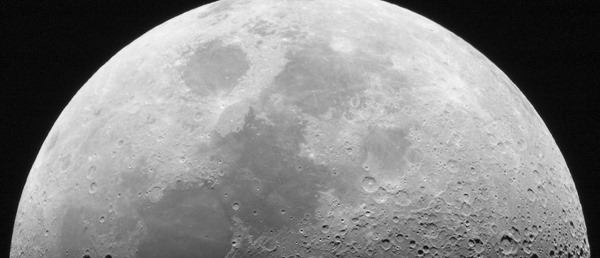
The Japan Aerospace Exploration Agency (JAXA — the country’s equivalent of NASA) announced earlier this week that it was developing plans to put a man on the moon by the year 2030. While the proposal is yet to be approved by the nation’s government, if successful it will be the first time a Japanese astronaut is sent on a mission beyond the International Space Station.

Of course, this doesn’t mean Japan is planning to build and launch its own rocket all on its own. Instead JAXA says it wants to contribute to a NASA-led, multinational mission to build a new space station within the moon’s orbit. With the mission scheduled to begin in 2025, Japan hopes that contributing its own cutting-edge technology will help it secure its own spot on the station.

JAXA will present a more formal blueprint of its plans to the government sometime next year, but the idea is that once Japan has a place on the new space station, it will lead to eventually putting one of its astronauts on the moon’s surface.

This announcement is seen by some as Japan’s entry into the “Asian space race,” with several nearby countries also developing ambitious space missions. China, for example, revealed last year its plans to land a rover on Mars by the year 2020, followed by its own manned mission to the moon. In 2014, India launched its own Mars probe, and in 2018 it plans to launch its second unmanned lunar mission.

Sunday, 2 July 2017

India gets a sharper eye in the sky

30THNSMPTI6282017000170A

By: Madhumathi D.S

Recently launched Cartosat-2E sends pictures from 500 km above the earth

A railway station in Rajasthan and eye-catching locations in Qatar and Egypt are among the early pictures beamed down by the the week-old Cartosat-2 series spacecraft.

The satellite, known as Cartosat-2E, is the third Indian remote sensing (IRS) or earth observation satellite that can send 60-cm resolution pictures from an orbit 500 km above the earth.

Primarily it will provide useful space-based data for town planners, creators of urban infrastructure, for agriculture and project monitoring, and for decision makers in Smart City and AMRUTH projects, said a senior official of the Indian Space Research Organisation (ISRO).

Its applications apart, ISRO Chairman A.S. Kiran Kumar agreed that availability of high-resolution Cartosat-2E data to civil agencies would drive down import of remote sensing imageries from foreign EO satellites.

“The new EO satellite] can definitely reduce imagery imports. We will work towards that. Its data will be more than adequate for a large number of applications,” he told The Hindu.

Cartosat-2E is the sixth and last of the second generation cartography themed series, which started in 2007 with Cartosat-2 and includes Cartosat-2A, 2B, 2C and 2D.

The last three are said to be exclusive for defence and security agencies. Cartosat-2E offers images of the same 60-cm resolution as 2C and 2D; the same feature is now available for the genuine use of civil agencies, mostly government agencies. That is — it can capture objects that are 60-cm wide or long.

Mr. Kiran Kumar did not mention import figures but explained that earlier, imageries had to be imported because Indian EOs offered only 1-metre resolution pictures. “Now there is the sub-metre availability which will make a significant impact.”

Mr. Kiran Kumar did not mention import figures but explained that earlier, imageries had to be imported because Indian EOs offered only 1-metre resolution pictures. “Now there is the sub-metre availability which will make a significant impact.”

A report of the Comptroller and Auditor General for 2010-11 had noted that “the prices of high resolution satellite data in the international market were six times more than the prices of comparable products” of Indian remote-sensing satellites.

On the third-generation Cartosats, Mr. Kiran Kumar said they were working on Cartosat-3, the first approved spacecraft in the series.

The Hindu Times: NASA unveils stunning image of Jupiter

02INTHVLRJUPITERShows haze particles over a range of altitudes, as seen in reflected sunlight.

NASA’s Earth-bound Gemini North telescope has beamed back a stunning image of Jupiter showing haze particles over a range of altitudes, as seen in reflected sunlight.

As the Juno spacecraft orbits Jupiter, the Gemini telescope is providing high-resolution images to help guide its exploration of the giant planet.

Astronomers at the telescope on Maunakea in Hawaii are revealing “a treasure-trove of fascinating events in Jupiter’s atmosphere,” said Glenn Orton, principal investigator for the Gemini adaptive optics investigation at NASA’s Jet Propulsion Laboratory in the US.

In addition to images using adaptive optics, Michael Wong from University of California, Berkeley in the US is using a longer-wavelength filter on the telescope to look at cloud opacity on the planet.

“These observations trace vertical flows that cannot be measured any other way, illuminating the weather, climate and general circulation in Jupiter’s atmosphere,” Mr. Michael said.


Still much to learn

“Events like this show that there’s still much to learn about Jupiter’s atmosphere,” Mr. Orton said.

“The combination of Earth-based and spacecraft observations is a powerful one-two punch in exploring Jupiter,” he said.

Tom Pickett: Gamma Cygni Or Sadr, In The Heart Of Cygnus And The Crescent Nebula 06/28/2017

19467881_1359136564134451_4313110657727267933_oHi Everyone I hope you are having a good day.
Over the past few night I have been going after the heart of Cygnus and the central star Gamma Cygni. There is a lot of dust and gas in this region of the sky including the Crescent Nebula.
...

Love this.
Have a good day and clear skies everyone. Gamma Cygni (? Cygni, abbreviated Gamma Cyg, Y Cyg), also named Sadr, is a star in the northern constellation of Cygnus, forming the intersection of an asterism of five stars called the Northern Cross.


Equipment Details
Camera: Canon EOS T2i/550D Modified And TEC Cooled
Lens: Canon 200mm F2.8 L Set At F4
Exposure: 6 Minutes Each
ISO: 400
Number of Stacked Images: 86
Number of Dark Frames: 0
Number of Bias Frames: 0
Filters: Baader UV/IR cut filter
Mount: Takahashi EM-200 Temma 2
Guide Scope: Non
Stacking Software: DeepSkyStacker
Processing Software: Photoshop CS6 And Adobe Camera Raw
Shooting Date/Time 6/27/2017 10:59 PM
Shooting Date/Time 6/28/2017 11:04 PM
See more

Tom Pickett: M8 The Lagoon Nebula And M20 The Trifid Nebula 07/01/2017

19488542_1359760567405384_7739449074712326815_oHi Everyone... I hope you are having a good day.
Over the past 2 nights I went after M8 The Lagoon Nebula And M20 The Trifid Nebula with my trusty Canon 200mm F 2.8 L lens... I love it, the colours turned out very nice. ...
Have a good day and clear skies everyone.
Details
The Lagoon Nebula (catalogued as Messier 8 or M8, NGC 6523, Sharpness 25, RCW 146, and Gum 72) is a giant interstellar cloud in the constellation Sagittarius. It is classified as an emission nebula and as an H II region.

The Lagoon Nebula was discovered by Giovanni Hodierna before 1654 and is one of only two star-forming nebulae faintly visible to the eye from mid-northern latitudes. Seen with binoculars, it appears as a distinct oval cloudlike patch with a definite core. In the foreground is the open cluster NGC 6530.The Trifid Nebula (catalogued as Messier 20 or M20 and as NGC 6514) is an H II region located in Sagittarius. It was discovered by Charles Messier on June 5, 1764. Its name means 'divided into three lobes'. The object is an unusual combination of an open cluster of stars; an emission nebula (the lower, red portion), a reflection nebula (the upper, blue portion) and a dark nebula (the apparent 'gaps' within the emission nebula that cause the trifurcated appearance; these are also designated Barnard 85). Viewed through a small telescope, the Trifid Nebula is a bright and peculiar object, and is thus a perennial favourite of amateur astronomers.

The Trifid Nebula is a star-forming region in the Scutum spiral arm of the Milky Way. The most massive star that has formed in this region is HD 164492A, an O7.5III star with a mass more than 20 times the mass of the Sun.This star is surrounded by a cluster of approximately 3100 young stars.

Equipment Details
Camera: Canon EOS T2i/550D Modified And TEC Cooled
Lens: Canon 200mm F2.8 L Set At F4
Exposure: 4 Minutes Each
ISO: 400
Number of Stacked Images: 78
Number of Dark Frames: 0
Number of Bias Frames: 0
Filters: Baader UV/IR cut filter
Mount: Takahashi EM-200 Temma 2
Guide Scope: Non
Stacking Software: DeepSkyStacker
Processing Software: Photoshop CS6 And Adobe Camera Raw
Shooting Date/Time 6/29/2017 10:48 PM
Shooting Date/Time 6/30/2017 10:45 PM

Saturday, 1 July 2017

NASA's K2 mission: New hot Jupiter discovered

1498921477_nasa-k2-mission-exoplanet-hot-jupiter-spaceA new exoplanet dubbed EPIC 228735255b-- discovered by NASA's K2 mission-- has been classified as a hot Jupiter.

The planets which orbit their host star at a closer proximity than Mercury orbits the Sun are called hot Jupiter's (orbital period of less than 10 days). EPIC 228735255b has an orbital period of 6.57 days.

Hot Jupiter's are gas giant planets resembling characteristics of Jupiter.

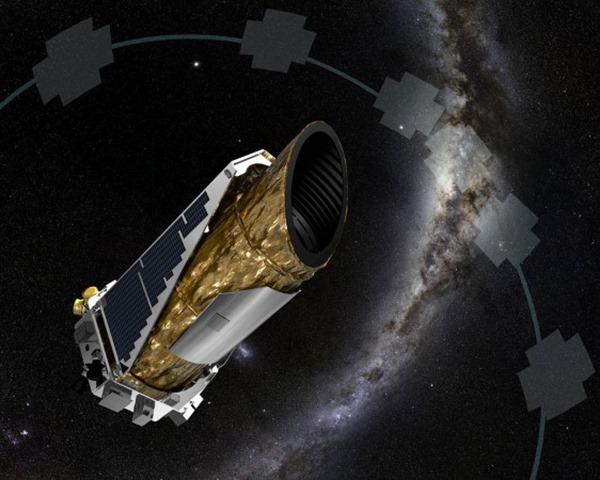
NASA's K2 is an extended mission. Kepler spacecraft spotted EPIC 228735255b-- with an eccentric orbit-- on July 10, 2016, as a planetary candidate during its Campaign 10, Phys.org reported.

The light curve of parent star EPIC 228735255 was detected first, and the exoplanet was found to possess mass and size similar to that of the Sun. Ground-based telescopes -- High Accuracy Radial Velocity Planet Searcher (HARPS) and Euler Telescope at Chile's La Silla Observatory, Arizona's Kitt Peak telescope and South Africa's Las Cumbres Observatory (LCO) telescopes -- were used by the astronomers for the follow-up research.

The researchers found that the exoplanet has an equilibrium temperature of approximately 1,114°K. The hot Jupiter planets have high surface temperatures due to their close proximity with parent stars.

The research has been published in the Cornell University Library's Arxiv.org.

"This discovery is the ninth 'hot Jupiter' from K2 and highlights K2's ability to detect transiting giant planets at periods slightly longer than traditional, ground-based surveys," the research team of astronomers said.

This hot Jupiter is as gigantic as the largest planet known to be present in the solar system – Jupiter. The radius of this hot Jupiter is around 1.09 Jupiter radii. The exoplanet is slightly inflated hence it has a bulk density of around 27 percent lower than that of Jupiter.

NASA Statement on National Space Council

National Space Council Executive OrderThe following is a statement from acting NASA Administrator Robert Lightfoot about Friday’s Executive Order creating the National Space Council:

“I am pleased that President Trump has signed an executive order re-establishing the National Space Council. The council existed previously from 1989-1993, and a version of it also existed as the National Aeronautics and Space Council from 1958-1973. As such, the council has guided NASA from our earliest days and can help us achieve the many ambitious milestones we are striving for today.

“This high-level group advises the president and comprises the leaders of government agencies with a stake in space, including the NASA administrator, the Secretaries of State, Commerce, Defence, and others, and will be chaired by Vice President Mike Pence. It will help ensure that all aspects of the nation’s space power -- national security, commerce, international relations, exploration, and science, are coordinated and aligned to best serve the American people.  A Users’ Advisory Group also will be convened so that the interests of industries and other non-federal entities are represented.

“The establishment of the council is another demonstration of the Trump Administration’s deep interest in our work, and a testament to the importance of space exploration to our economy, our nation, and the planet as a whole.”

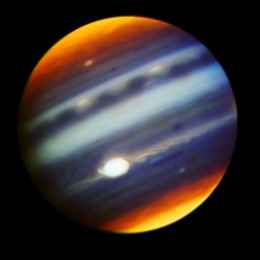
Jupiter With Great Red Spot, Mid-Infrared, May 2017

PIA21713_modestThis composite, false-colour infrared image of Jupiter reveals haze particles over a range of altitudes, as seen in reflected sunlight. It was taken using the Gemini North Telescope's Near-Infrared Imager (NIRI) on May 18, 2017, in collaboration with the investigation of Jupiter by NASA's Juno mission. Juno completed its sixth close approach to Jupiter a few hours after this observation.

The multiple filters corresponding to each colour used in the image cover wavelengths between 1.69 microns and 2.275 microns. Jupiter's Great Red Spot (GRS) appears as the brightest (white) region at these wavelengths, which are primarily sensitive to high-altitude clouds and hazes near and above the top of Jupiter's convective region.

The GRS is one of the highest-altitude features in Jupiter's atmosphere. Narrow spiral streaks that appear to lead into it or out of it from surrounding regions probably represent atmospheric features being stretched by the intense winds within the GRS, such as the hook-like structure on its western edge (left side). Some are being swept off its eastern edge (right side) and into an extensive wave-like flow pattern, and there is even a trace of flow from its northern edge.

PIA21714_modest Other features near the GRS include the dark block and dark oval to the south and the north of the eastern flow pattern, respectively, indicating a lower density of cloud and haze particles in those locations. Both are long-lived cyclonic circulations, rotating clockwise -- in the opposite direction as the counter clockwise rotation of the GRS.

A prominent wave pattern is evident north of the equator, along with two bright ovals, which are anticyclones that appeared in January 2017. Both the wave pattern and the ovals may be associated with an impressive upsurge in stormy activity that has been observed in these latitudes this year. Another bright anticyclone oval is seen further north. The Juno spacecraft may pass over these ovals, as well as the Great Red Spot, during its close approach to Jupiter on July 10, 2017, Pacific Time (July 11, Universal Time).

High hazes are evident over both polar regions with much spatial structure not previously been seen quite so clearly in ground-based images

The filters used for observations combined into this image admit infrared light cantered on the following infrared wavelengths (and presented here in these colours): 1.69 microns (blue), 2.045 microns (cyan), 2.169 microns (green), 2.124 microns (yellow), and 2.275 microns (red).

Thursday, 29 June 2017

Universe Was Rife With Iron Early On, Say Astrophysicists

six-galaxy-clustersMost of the Universe’s iron had already been uniformly distributed inside intergalactic gas some 10 billion years ago --- or well before the first galaxy clusters even formed, an international team of astrophysicists report.

Using 26 independent measurements of ten nearby galaxy clusters taken by Japan’s Suzaku x-ray satellite, the team was surprised to find that the gas between these galaxies has iron metallicities about a third of solar. That is, a third of the iron found in our own Sun. (Astronomers term anything heavier than helium, a metal.)

“The fact that the distribution of iron appears so homogeneous indicates that it has been produced by some of the first stars and galaxies that formed after the Big Bang,” Ondrej Urban, the lead author of a paper being published by the Monthly Notices of the Royal Astronomical Society (MNRAS), said in a statement.

The findings are important because iron --- which forms in the last stages of a star that’s about to go supernova --- is crucial to life as we know it. Astrobiologists may in turn push back the clock on when life could have begun based on these findings. That’s because terrestrial mass planets like Earth are laden with iron cores and we ourselves need this stellar by-product to carry oxygen in our bloodstreams.

The paper also notes that the early universe was likely even more violent and topsy-turvy than previously thought.

Iron, and many other elements, was blown out of galaxies by the combined energy of billions of supernovae, as well as outbursts from growing supermassive black holes, the team noted in a statement.

Galaxy clusters, the authors note, have long been valued as unique astrophysical labs which allow cosmologists to study the onset of nucleosynthesis --- the nuclear processes that form elements --- and the chemical enrichment history of the Universe.

It’s been known for some four decades, they note, that a significant portion of the hot plasma in the central regions of galaxy clusters has been enriched by iron produced in stars. Their work corroborates aspects of earlier observations.

What’s unique about these findings however, the authors say, is that the Suzaku measurements found such an unexpectedly homogeneous metal distribution in the outskirts of the nearby Perseus Cluster. Just when and how these metals were injected into the intergalactic medium (the space between galaxies) is not well understood, they note.

Iron’s uniform distribution also means that the combined energy of many supernovae --- as well as the jets and winds of accreting supermassive black holes --- enabled the thorough mixture of the elements across cosmic time, Norbert Werner, the paper’s second author and an astrophysicist at Eötvös Loránd University in Budapest, noted in a statement.

Wednesday, 28 June 2017

Is evidence of extra dimensions hiding in gravitational waves?

Is-evidence-of-extra-dimensions-hiding-in-gravitational-wavesMany theoretical frameworks used to explain quantum gravity and other cosmological phenomena, including string theory, require extra dimensions. Some use space-time as a single extra dimension, while others use several extra space-time dimensions.

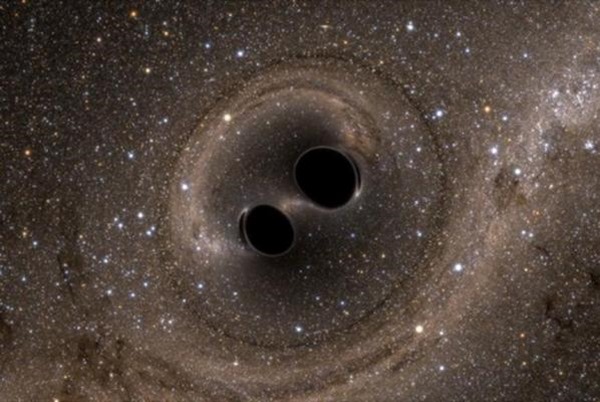
In a new study, researchers suggest evidence of extra dimensions could be hiding in gravitational waves. Scientists at the Max Planck Institute for Gravitational Physics theorized how these extra dimensions might influence the space-time ripples, with hopes of directly observing their predictions.

Astrophysicists believe LIGO, the gravitational wave-detection system, can help them study gravity itself.

"Compared to the other fundamental forces like, e.g. electromagnetism, gravity is extremely weak," David Andriot, one of the authors of the new study, said in a news release.

Theories of quantum gravity, such as string theory, attempt to bring the predictions and premises of quantum mechanics into agreement with those of general relativity. Extra dimensions help quantum gravity theories explain the behaviour of large masses as infinitesimal scales.

"Physicists have been looking for extra dimensions at the Large Hadron Collider at CERN but up to now this search has yielded no results," said study co-author Gustavo Lucena Gómez. "But gravitational wave detectors might be able to provide experimental evidence."

Scientists at the Albert Einstein Institute predicted that extra dimensions would alter the "standard" gravitational wave, as well as trigger the propagation of additional waves at frequencies above 1000 Hz. Unfortunately, LIGO is capable of detecting such high-frequency waves.

However, researchers are hopeful that LIGO, with the help of the forthcoming Virgo detector, will help scientists detect the ways in which extra dimensions alter the stretching and shrinking of space-time in standard gravitational waves.

The team of astrophysicists detailed their work in a new paper, published this week in the Journal of Cosmology and Astroparticle Physics.

KEPLER HAS TAUGHT US THAT ROCKY PLANETS ARE COMMON

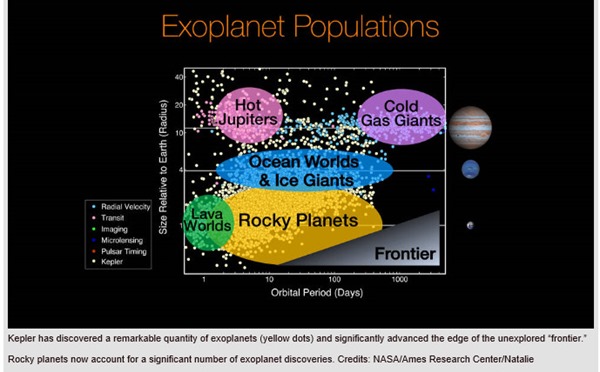
Ashampoo_Snap_2017.06.28_17h36m37s_002_Rocky planets are probably a whole lot more common in our galaxy than astronomers previously believed — according to the latest release of Kepler Space Telescope data last week — a scenario that enhances the prospects for extra-terrestrial life in nearby solar systems.

Kepler's final tally of exoplanets in the Cygnus constellation — the most comprehensive and detailed catalogue of exoplanets to date — indicates 4,034 possible planets, of which 50 are Earth-sized and reside in the habitable zone of their stars. The set includes KOI 7711 (short for# Kepler 'object of interest'), which is just 30 percent larger than Earth and roughly the same distance from its star as the Earth is to the Sun, meaning it receives a similar amount of energy.

"Kepler has really and truly opened our eyes to these small terrestrial-sized worlds," said Susan Thompson, Kepler research scientist at the SETI Institute, at the announcement of the new catalogue of planet candidates at NASA Ames Research Center in Mountain View, California.

Scientists gathered at NASA Ames June 19-23 for the Kepler Science Conference to present their findings from the original mission as well as update their progress on K2, an extended, "second life" mission that will continue until the spacecraft runs out of fuel or something else
goes wrong.

Prior to Kepler's launch in 2009, astronomers mainly knew about Jupiter and Neptune-sized planets orbiting at various periods around their stars. It took the continuous gaze of Kepler's image sensor array at a patch of sky loaded with 200,000 stars to discover this sizable population of rocky-sized worlds, most of them three times the size of Earth or smaller. Many hover close to their stars, but some appear with long orbital periods putting their distance outside a habitable zone. About a half-dozen confirmed exoplanets, though, are circling within# the habitable zone of G-dwarf stars — the same type of star as the Sun.

"Are we alone?" said Mario Perez, Kepler program scientist in the Astrophysics Division of NASA's Science Mission Directorate. "Kepler says we are probably not alone."

Yet, the prospects for life on any single one of these planets remains vastly uncertain. We know virtually nothing about the size and composition of their atmospheres, or whether water is present. For example, at 1,700 light years away, KOI 7711, dubbed 'Earth's Twin,' seems one of the most promising exoplanets for life that we know of to date, given its similar orbital period (it circles its star in 303 days) and size. But Thompson urged caution in drawing hasty conclusions. "There's a lot we don't know," she said." I like to remind people that it looks like there are three planets in our habitable zone — Venus, Earth and Mars — and I only want to live on one of them."

Ashampoo_Snap_2017.06.28_17h35m54s_001_The recently discovered TRAPPIST-1 star system, a mere 40 light years away from us, has a record-breaking seven rocky planets, raising all kinds of excitement at the possibility of panspermia, the seeding of life from one planet to a neighbouring one. But given that they huddle  close to their ultra-cool dwarf star, these planets are likely to be tidally locked, like Mercury. One side would be scorching and the other side frigid. Stellar flares could blast away the
atmospheres of these planets or subject them to surges of UV radiation, a known detriment to earthly existence.

But Courtney Dressing, a CalTech astronomer, offered some signs of hope, even for planets that look doomed. She pointed out that new research using sophisticated 3-D models is showing that if tidally-locked planets manage to hang onto their atmospheres, strong air currents could be evening out temperatures. "There's a chance you could have a bunch of civilizations where maybe all the astronomers live on one side of the planet and everyone else enjoys the sunny, beach-y side close to the star," she said.

And UV radiation, which may have sparked life the formation of RNA on early Earth, may not be the end-all even in the form of sudden surges. For example, one study found that halo archaea, an extremophile microorganism found in highly saline water, could withstand heavy blasts of UV radiation. "Even if the surface is a dangerous place, life could be thriving underground or underwater," Dressing said.

Stellar flaring and its impact on life is an area of active research in astrobiology, given that M dwarf stars, many of which are prone to flaring, are numerous in our galaxy and host rocky planets that are astronomers' most accessible prospects for near-term bio-signature research.

"Regardless of whether any of these newly detected planet candidates are inhabited, the fact that Kepler has discovered 50 potentially habitable planets and planet candidates implies that such worlds are frequent," wrote Dressing in an email. Future instruments are what's needed to move the science forward. Late next year, NASA (alongside the European Space Agency and Canadian Space Agency) is scheduled to launch the James Webb Space Telescope, a next generation space observatory that will be the best observation tool we have to measure the atmospheres of exoplanets close to us — a key to understanding other aspects of habitability. And also in development is the Wide Field Infrared Survey Telescope (WFIRST), which will expand the range of exoplanet exploration and build on Kepler's foundation.

"It feels a bit like the end of an era," said Thompson, "but actually it feels like a new beginning."

New-born star gorges on a 'space hamburger,' belching spinning jets

170420a_enAstronomers have observed the eating habits of a new-born star — and like any youngster, it has an affinity for fast food.

Using the powerful Atacama Large Millimeter/submillimetre Array (ALMA) in Chile, an international team of researchers has imaged the flow of material around a "young" 40,000-year-old protostar called Herbig-Haro 212 (or HH 212), located some 1,300 light-years away in the constellation Orion. A protostar is the earliest stage of star evolution, just before the star begins nuclear fusion in its core.

Protostars are known to generate powerful jets of gas that blast into interstellar space and this work reveals that HH 212’s jets are spinning, with the material blasting out from the protostar's poles like bullets.

The spinning bullets confirm the hypothesis that angular momentum is being removed from the protostar's accretion disk, or the orbiting gas and debris around the star, which the study's authors refer to as a "space hamburger." [Meet ALMA: Amazing Photos from Giant Radio Telescope]

HH 212's accretion disk is nearly edge-on from our perspective on Earth and has a radius of 60 astronomical units (AU), where 1 AU is the average distance at which the Earth orbits the sun — about 93 million miles. The disk has a "prominent equatorial dark lane sandwiched between two brighter features," the researchers said in a statement, giving it a resemblance to a hamburger.

The discovery of HH 212's rotating jets was made around the same time as another team was using ALMA to clock the angular momentum of rotating jets blasting from Orion KL Source I in the Orion Nebula, another protostar.

"We see jets coming out from most baby stars, like a train of bullets speeding down along the rotational axis of the accretion disks. We always wonder what their role is," lead astronomer Chin-Fei Lee, of the Academia Sinica Institute of Astronomy and Astrophysics (ASIAA) in Taiwan, said in a statement. "Are they spinning, as expected in current models of jet launching? However, since the jets are very narrow and their spinning motion is very small, we had not been able to confirm their spinning motion.

"Now, using the ALMA, with its unprecedented combination of spatial and velocity resolutions, we not only resolve a jet near a protostar down to 10 astronomical units (AU) but also detect its spinning motion," Lee added. "It looks like a baby star spits a spinning bullet each time it takes a bite of a space hamburg

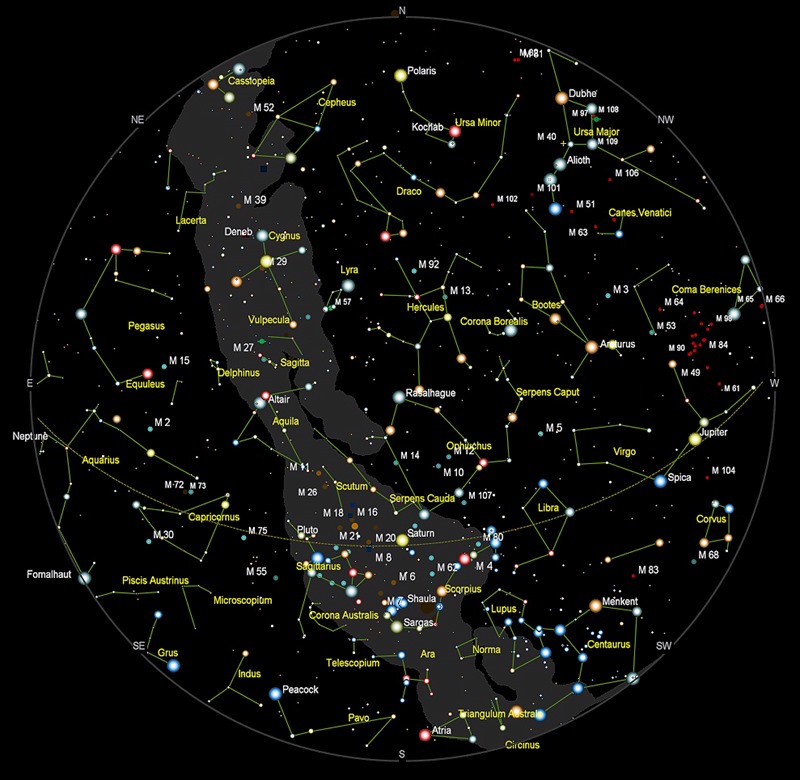
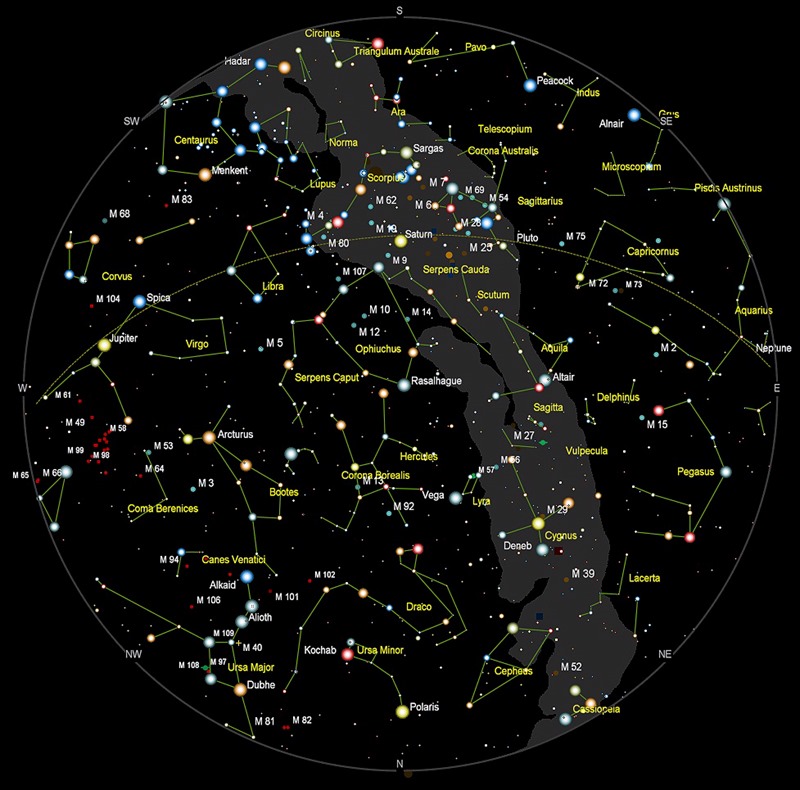
28 June: The Stars over the Philippines tonight at 23:00 pm local time

Manila South

Manila North

Bright nights: scientists explain rare phenomenon of 'nocturnal sun'

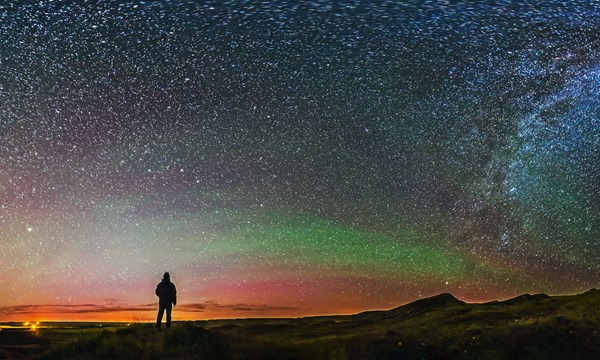
untitledThe Romans referred to it as the “nocturnal sun”. Later accounts describe it as an unexplained glow – bright enough to read a book by – that would sometimes light up the night sky.

Now researchers from York University in Canada have come up with a possible explanation for the rare phenomenon known as “bright nights”. Using satellite data, two atmospheric scientists from the Toronto institution suggest that the bright nights are not due to the sun or meteors, but instead the result of converging “zonal waves” in Earth’s upper atmosphere.

Accounts of the phenomenon are sprinkled throughout history. In the first century BC, Pliny the Elder wrote of an event that gives “an appearance of day during the night”. Subsequent accounts were published in 1783 and 1908.

Today, in the age of artificial light, few have experienced the event. “I have never seen one myself,” said Gordon Shepherd, the lead author of the study published this month in the journal Geophysical Research Letters.

In 1991, Shepherd built a satellite instrument capable of measuring airglow, which results when ultraviolet radiation from the sun separates molecular oxygen into individual atoms. The atoms recombine at night, once the sun disappears, releasing energy that emits a green tint.

His latest study came about after researchers noticed that, at times, airglow could be seen by the naked eye. Along with York University’s Young-Min Cho, Shepherd carried out an analysis of two years’ worth of satellite data, finding that wavelengths in the upper atmosphere were at times superimposed over each other, brightening the airglow by as much as tenfold.

Their analysis showed these bright nights occurred 7% of the time and were highly localised, confined to an area about the size of Europe. But outside of remote areas, chances of seeing an event nowadays are slim, due to widespread light pollution.

“If you go back to Roman times, you have a significant population and all of them are looking. They’re all living in an environment with no artificial light,” said Shepherd. “Now almost everybody is living with artificial light.”

The change might explain why accounts of bright nights seem to disappear after the first world war, he said. “They’re something we’ve lost – like we lost species, for example – but we can still see them with our satellites.”

Since the study was published, Shepherd said, he had heard from many whose families had passed down stories about experiencing the bright nights. One shared his grandfather’s story of being chastised as a child after accidentally staying out until midnight playing football, a story Shepherd chalked up to bright nights. “There’s a whole bunch of stories like that,” he added. “Anyone who has seen one is really struck by it.”

Tuesday, 27 June 2017

New Horizons: Occultations in Preparation for MU69

by Paul Gilster

16-3526-Lisa-HardawayOur spacecraft have never encountered an object as far from Earth as 2014 MU69, but New Horizons will change all that when it races past the Kuiper Belt object on New Year’s Day of 2019. This summer is an interesting part of the project because planners will use it to gather as much information as possible about what they’ll find at the target. We have three occultations to work with, one of them just past, and they are as tricky as it gets.

But before I get to the occultations, let me offer condolences to the family and many New Horizons friends of Lisa Hardaway, who died in January at age 50. Hardaway helped to develop the LEISA (Linear Etalon Imaging Spectral Array) spectrometer that brought us such spectacular results during the Pluto/Charon flyby. She was program manager at Ball Aerospace for the Ralph instrument that contains LEISA. Mission scientists used data from the instrument package to make geological, colour and composition maps of Pluto and its moons. The mission team has now dedicated the spectrometer in her memory.

Tracking a Fleeting Shadow

The MU69 occultations should provide useful data as we learn more about the KBO encounter environment. The first event occurred on June 2-3, with observers in Argentina and South Africa — 54 telescope teams in all — trying to track the shadow of MU69, which had occulted a star. Alan Stern, principal investigator for New Horizons, explains the goal:

Predicting the narrow stripe of MU69’s shadow over the Earth called for data from the European Space Agency’s Gaia mission as well as the Hubble Space Telescope. Remember that it was only in 2014, after a determined search, that the Hubble instrument discovered the 45-kilometre object, which is only 1/10,000th the mass of Pluto, although ten times larger than the average comet. Just the kind of KBO we’d like to study, in other words, but one we’ve had to characterize quickly in preparation for the upcoming flyby.

Screenshot-from-2017-06-27-08-39-19As the data from the recent occultation are analysed, we can look forward to another on July 10 and a third on July 17. For the July 10 event, mission scientists will use the Stratospheric Observatory for Infrared Astronomy (SOFIA), a 2.5-meter airborne telescope mounted in a Boeing 747SP jet. SOFIA can work at 45,000 feet, well above intervening clouds and capable of providing better data than the army of small telescopes used in the June occultation.

For the July 17 occultation, two dozen 40-centimetre telescopes will be deployed to Patagonia, where observers hope to scan more deeply for any debris around MU69. The star being occulted will be the brightest of the three, offering the best prospect for such detections. To track all this, keep an eye on the New Horizons KBO Chasers page, but as we get close to the event check the project’s Facebook page and the Twitter hashtag #mu69occ.

As of this morning, we’re 689,472,210 km from MU69 with 553 days to go until flyby.